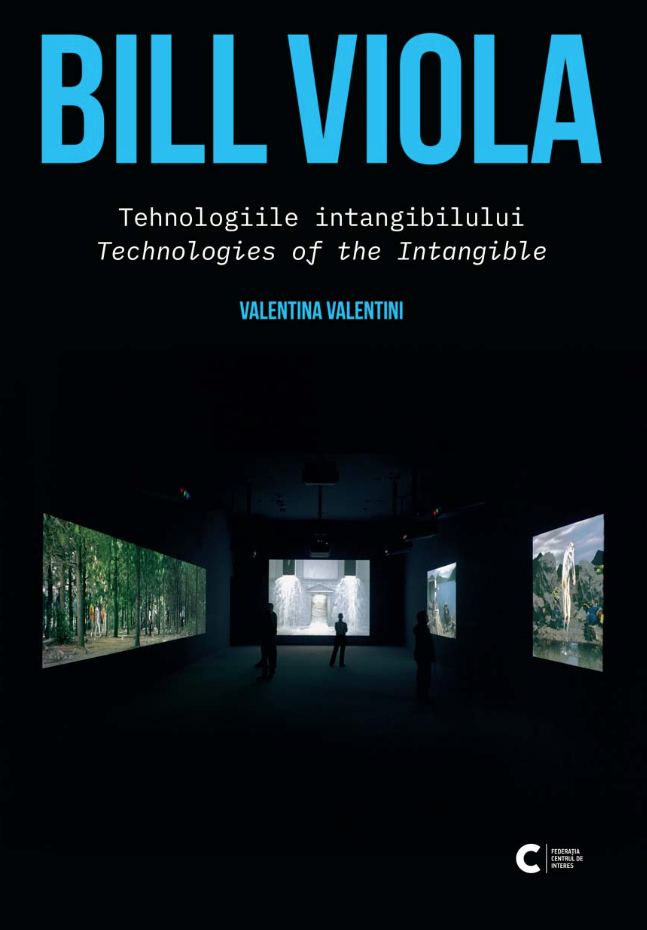

Bill Viola
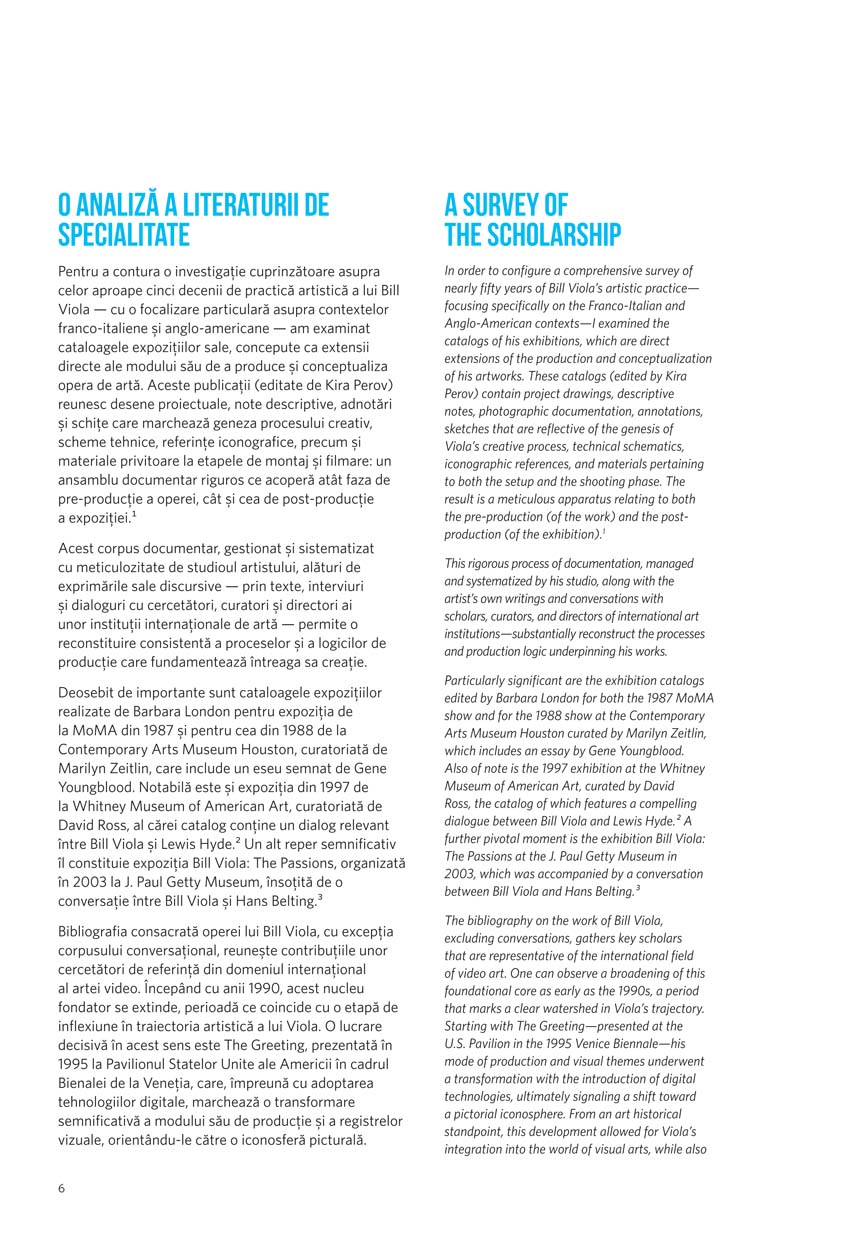
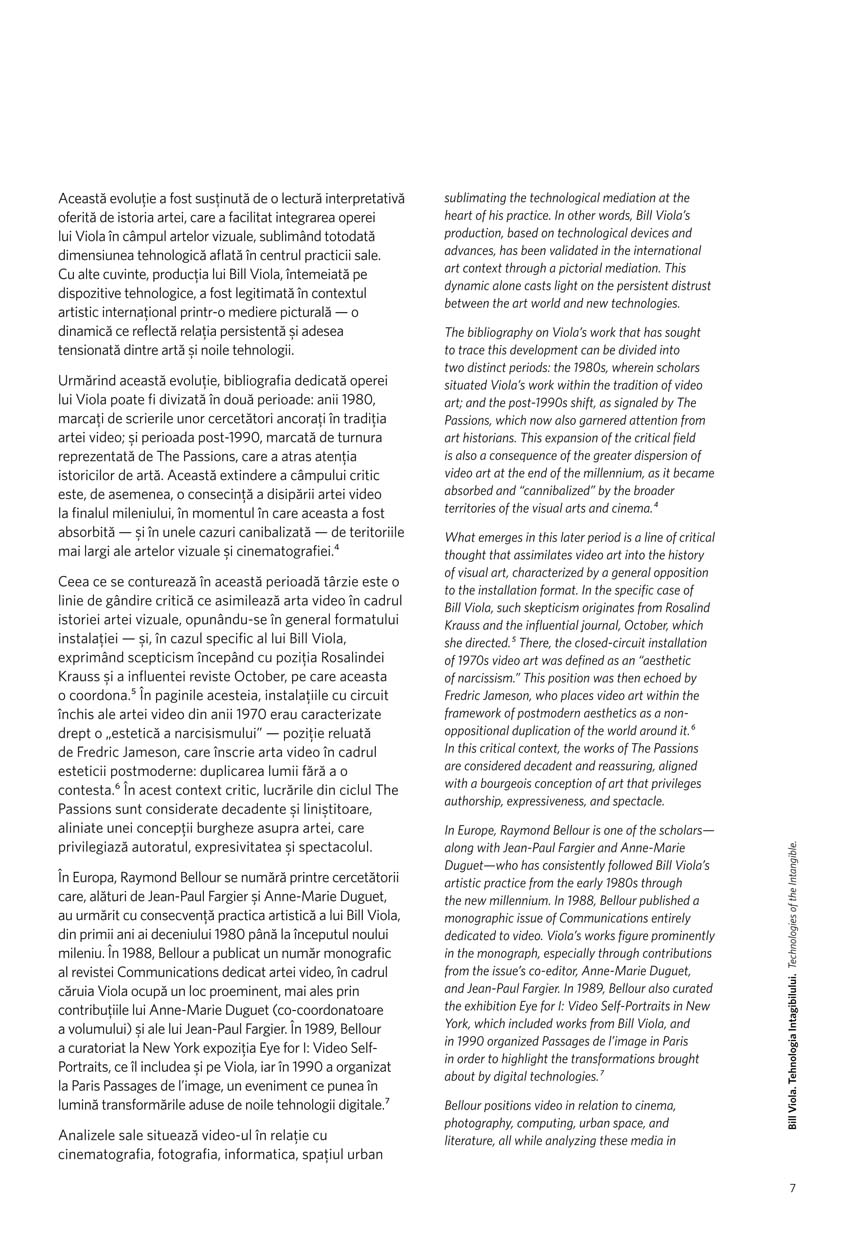
Anii ’90 marchează, pentru Bill Viola, o linie de demarcaţie profundă în parcursul său artistic: odată cu turning point-ul tehnologiilor digitale, modul său de producţie şi temele vizuale se transformă, indicând o apropiere de un tip de cunoaştere picturală care – graţie passe-partout-ului oferit de istoria artei – îi permite accesul în lumea artelor vizuale, sublimând medierea tehnologică.
Valentina Valentini (din Introducere)
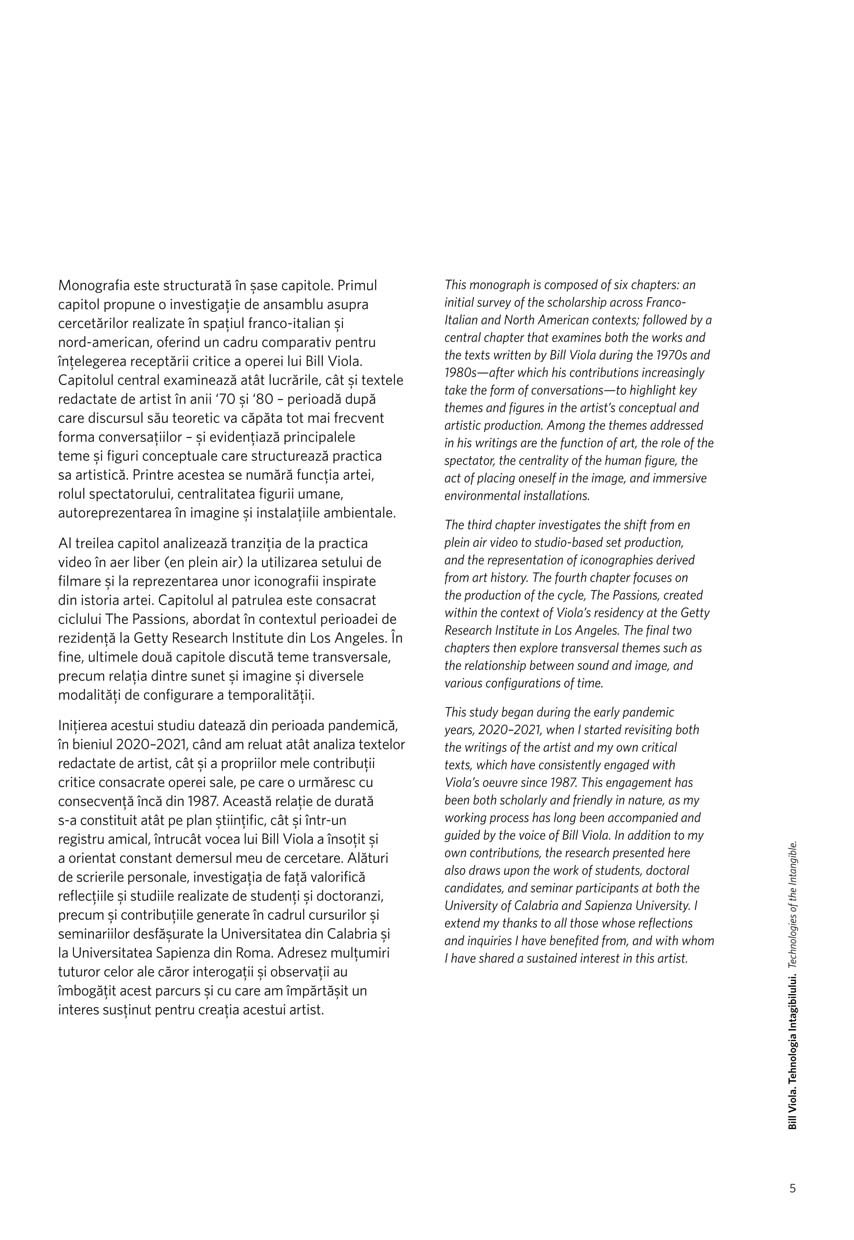
Această monografie este alcătuită din şase capitole: o scurtă trecere în revistă a studiilor existente; un capitol central în care sunt analizate temele şi figurile esenţiale ale producţiei conceptuale şi artistice ale autorului – funcţia artei, rolul spectatorului, centralitatea figurii umane şi instalaţiile ambientale. Cel de-al treilea capitol examinează tranziţia de la video-ul en plein air la cel de tip scenă (set) şi reprezentarea unei iconografii provenite din istoria artei. Al patrulea capitol este dedicat lucrărilor din ciclul The Passions; ultimele două capitole abordează teme transversale, precum relaţia dintre sunet şi imagine şi figurile timpului.
For Bill Viola, the 1990s mark a profound line of demarcation within his artistic trajectory: with the turning point of digital technologies, both his mode of production and his visual themes undergo transformation, indicating a movement toward a painterly knowledge which–thanks to the passe-partout of art history–enables his entry into the world of the visual arts, sublimating technological mediation.
Valentina Valentini (from the Introduction)
This monograph is composed of six chapters: a brief overview of the existing studies; a central chapter in which key themes and figures of the artist’s conceptual and artistic production are examined-the function of art, the role of the spectator, the centrality of the human figure, and environmental installations. The third chapter analyses the transition from en plein air video to the set, as well as the representation of iconography derived from the history of art. The fourth chapter is dedicated to the works of the cycle The Passions; the final two chapters address transversal themes such as the relationship between sound and image and the figures of time.
Bill Viola was born in New York in 1951. In 1969 he enrolled in the Faculty of Fine Arts at Syracuse University (New York), where he studied painting and electronic music; at the same time, he played as a drummer in the group Rain Forest led by David Tudor. From 1974 to 1976, he worked as a video operator and technical director at Art/Tapes/22 in Florence, the first production studio for video art. In 1976, he became artist-in-residence at the WNET/Thirteen Television Laboratory in New York (1976-81), where he had the opportunity to work with the mast advanced technological resources of the time. At the 1996 Venice Biennale, the American Pavilion was dedicated to him. In 2008, at the Palazzo delle Esposizioni in Rome, Kira Perov curated a major retrospective of Bill Viola’s works. He passed away in Long Beach in 2024.