Bilingv (Ro-En)
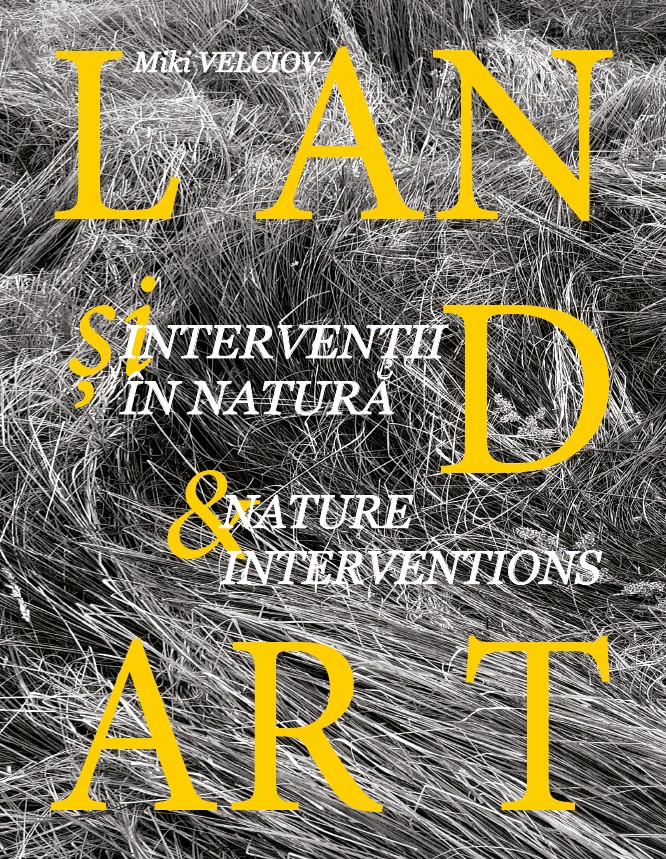
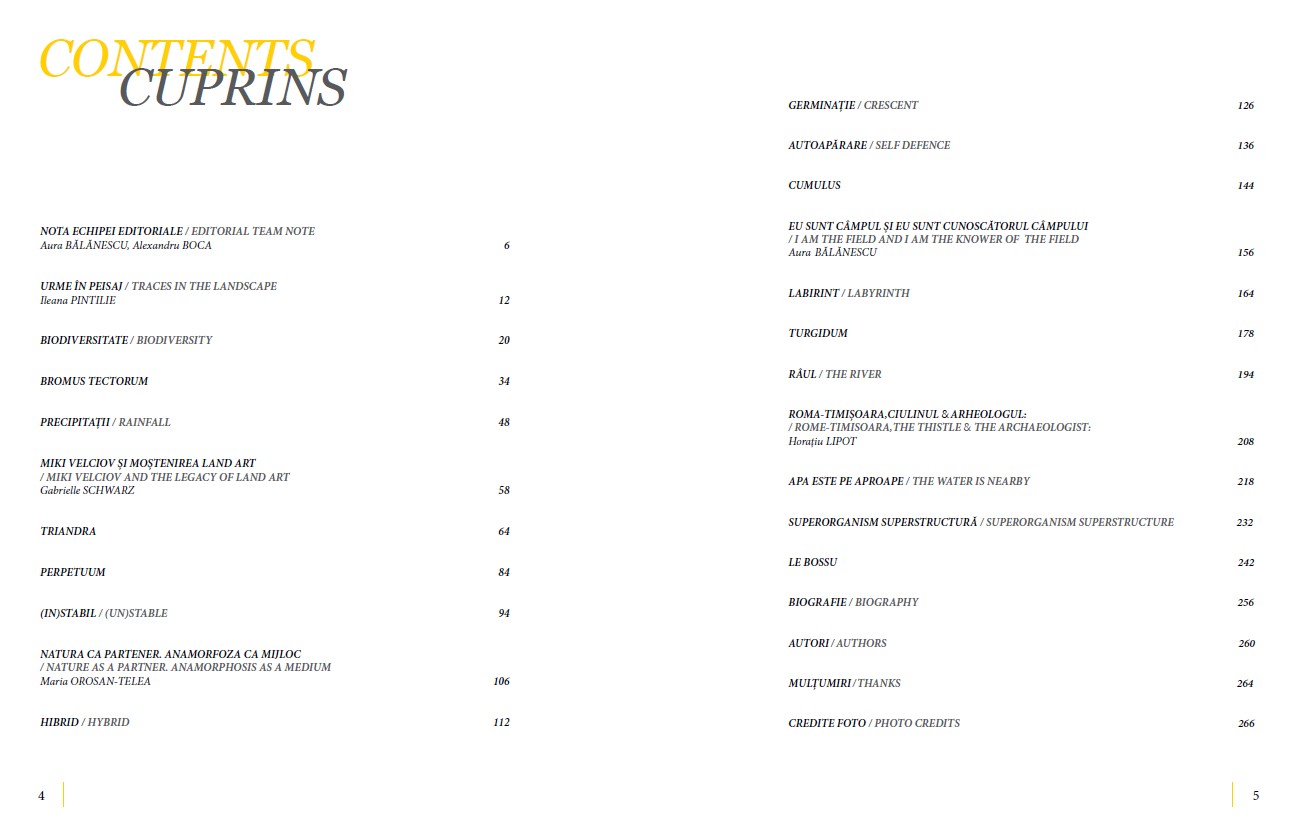
Catalogul de autor „Miki Velciov. Land Art și intervenții în natură” reunește șaisprezece proiecte artistice raportate la scara unor peisaje sălbatice, acolo unde dialogul cu natura devine profund, incomod și absolut necesar în contextul crizei contemporane. Proiectele lui Miki Velciov reprezintă hărți conceptuale unde ideile prind contur prin schițe, notițe de teren, măsurători și imagini aeriene care ne provoacă să înțelegem nu doar rezultatul vizibil al unei arte convenționale, ci și aspectele unei gândiri interdisciplinare care a stat la baza fiecărei intervenții. Arta se îmbină cu știința, dar și cu educația, studenții de la arte, arhitectură sau agronomie devenind co-creatori într-un proces de formare practică care pune în mișcare imaginația, dar și întreaga corporalitate printr-un apel la implicare lansat către cei care cred că arta poate educa și transforma. Miki Velciov nu doar face artă în natură, ci proiectele sale sunt o meditație materializată la scară largă asupra raportului tensionat dintre om și mediu, dar și un gest etic, de poziționare conștientă într-o lume în criză și asta pentru că natura nu este doar un spațiu de lucru, ci un subiect viu și un partener de dialog. Autorii invitați, Ileana Pintilie, Gabrielle Schwarz, Maria Orosan Telea și Horațiu Lipot, analizează critic practicile artistice ale lui Miki Velciov printr-o perspectivă pluralistă, subliniată și de Ion Gherman printr-un design grafic special conceput. Editorii Aura Bălănescu și Alexandru Boca motivează necesitatea existenței acestui catalog, care, prin caracterul său unic pe piața de carte națională, ne invită la un moment de luciditate, la o gândire creativă și la o reconectare cu esențialul.
Prin fiecare lucrare a sa, de la structurile anamorfice care decodează supravegherea și controlul până la intervențiile de tip land art și activismul ecologic, Miki Velciov trasează un parcurs radical în peisajul artei românești contribuind la crearea unei arte vii, critice și profund ancorate în realitatea contemporană. O artă care ne invită să participăm, să simțim și să regândim relația noastră cu natura și societatea.
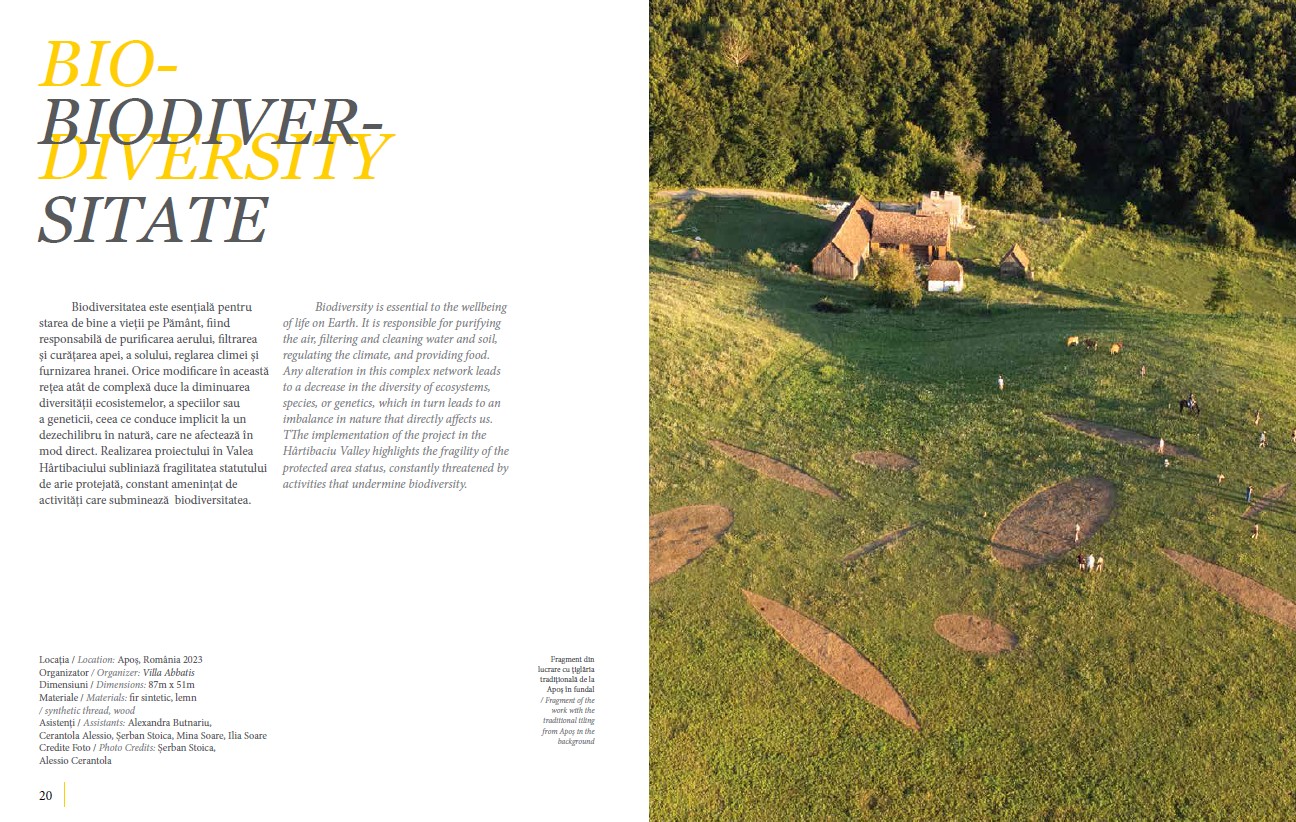
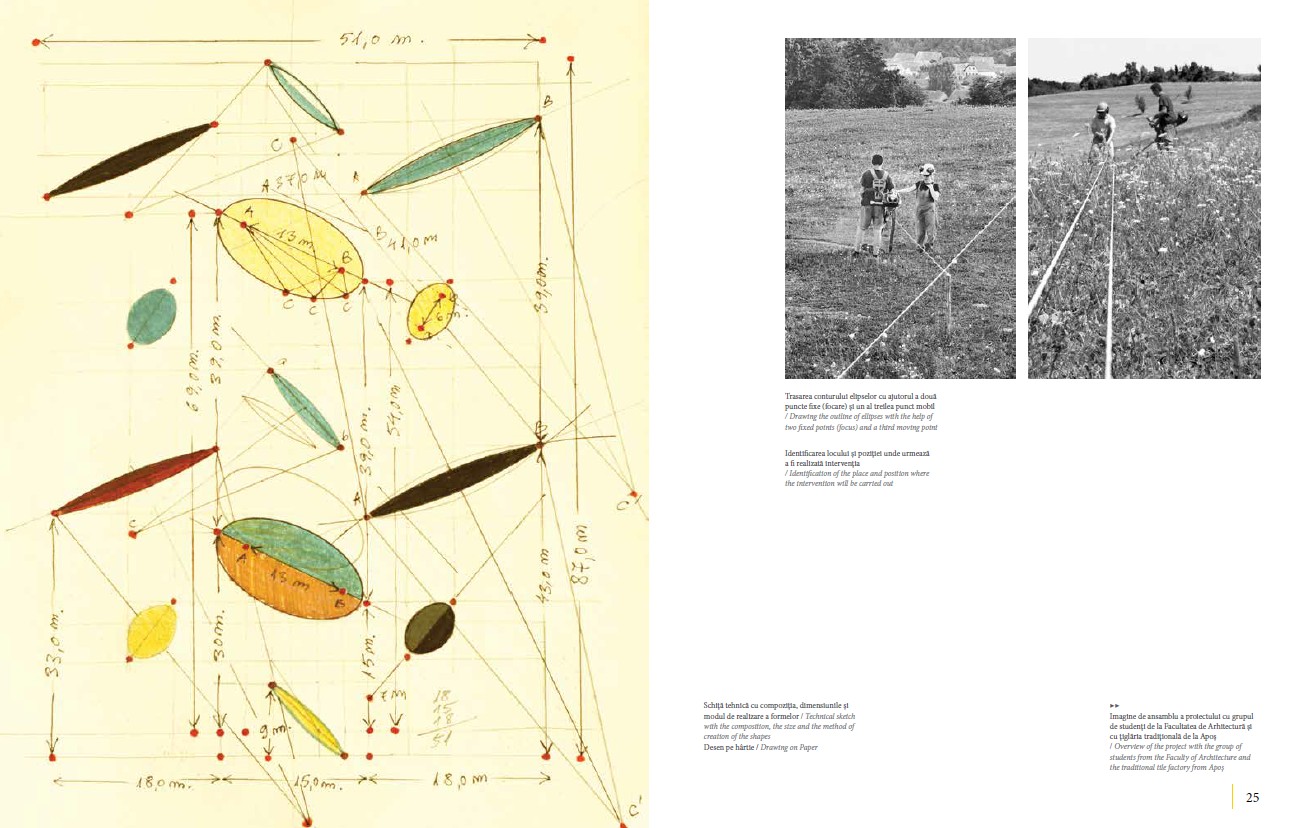
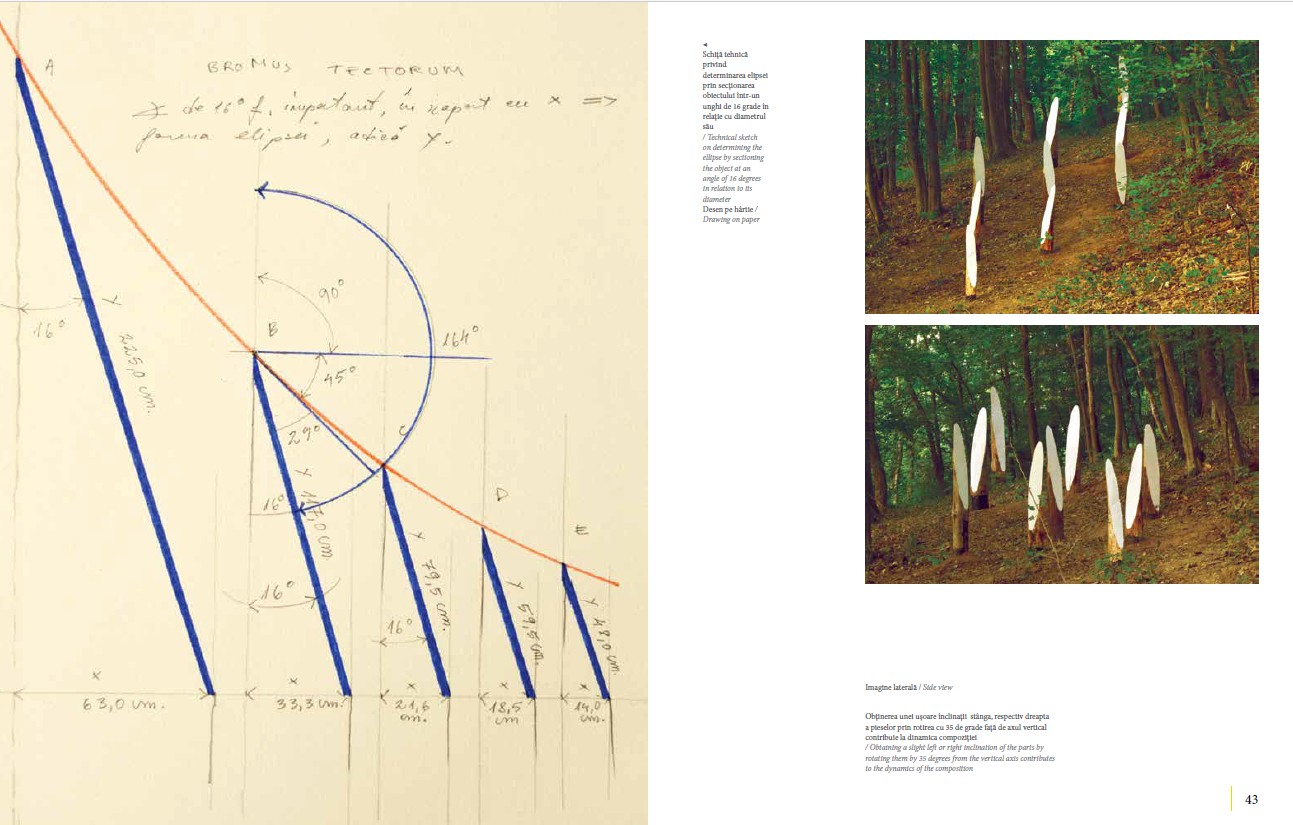
The catalogue Miki Velciov. Land Art and Interventions in Nature opens a series of editorial projects proposed by the Tehnoarte Association to bring into the public sphere the work of artists who have contributed to defining Timișoara’s artistic creation in the last 10 years. This first catalogue in the series maps 16 artistic projects realised by Miki Velciov between 2016 and 2023, in which the multiple valences of land art are presented, both thematically, by addressing specific concepts of environmental activism, and technically, by creating monumental anamorphic installations that engage the viewer in optical illusions extended to the scale of a landscape. The catalogue thus reveals a whole arsenal of technical concepts and descriptions, sketches and notes, measurements, calculations and topographical analysis, followed by photographs taken during the creation and drone images to capture the works as a whole.
It also presents the technical arsenal used by Velciov to realise his monumental anamorphic installations that involve viewers in optical illusions extended to the scale of the landscape, referring to vanishing points arising from the pyramids of visual perspective. Guest authors such as Ileana Pintilie complement the documentation with critical studies, referring to the role of the land art artist in bringing ecological issues to light. Gabrielle Schwarz emphasises the tendency of land art experiments to transform the classical theme of the landscape into a “flux, due to both our own movements through space and the changing conditions around us.” Maria Orosan Telea talks about the history of the anamorphosis abscondita approaches, specific to the Italian Baroque to “ create harmonious, balanced ensembles or achieve optical effects of lengthening distances and equalising elements, which, in fact, have different dimensions.” Horațiu Lipot asks us a rhetorical question: “What would an archaeologist from superrational future think of these true codexes by Miki Velciov?” Aura Bălănescu emphasises the “observational situations” specific to Velciov’s compositions, which place the viewer in the context of the coexistence of contradictory states.
Miki Velciov approaches a novel artistic language by synthesising traditional artistic genres like painting, sculpture, and architecture with new genres like photography and video, which he uses as witnesses of the process of creating and unmaking the work. His attention to the link between art and nature is evident in the projects he has realised at Green Forest, Hydropower, Garana, or Arts Danube Citadel. But later, in projects at the Young Naturalists’ Resort, the Subuleasa Canal, Land Art Shilla, or the summer school in Apoș, Velciov demonstrated how his expertise can be shared with artists, architects in training, and young people interested in contemporary art or interventions in nature. This pedagogical dimension dedicated to art, architecture, and agronomy students has become part of the creative process through their involvement in workshops, presentations, and collective creation sessions, and a relational aesthetics component has been highlighted, whereby the themes of nature are approached as pretexts for discussion on the influence of man on the natural environment. This catalogue thus offers a glimpse behind the creative process of complex works with educational and informative potential.
The land art works created and documented by Miki Velciov no longer exist; many were ephemeral interventions in sites that nature has reclaimed or interventions that have been installed, documented, and dismantled. This catalogue thus becomes a unique testimony to a series of lost artistic creations, positioning itself as an important editorial debut for the artist, who thus wishes to contribute to the national art scene. In this context, an art book with images and explanations directly from the artist and critical texts from theorists can mediate the relationship between the public and an unknown but potentially visible and informative artistic niche. The catalogue proposes Miki Velciov as a representative of the land art movement in Europe, but also maps the specific natural spaces of the wild areas in which the artist has created through approachable and consistent content for the public to understand the process and challenges of the act of creating artistic interventions in nature, as well as raising questions about human influence on the natural environment.