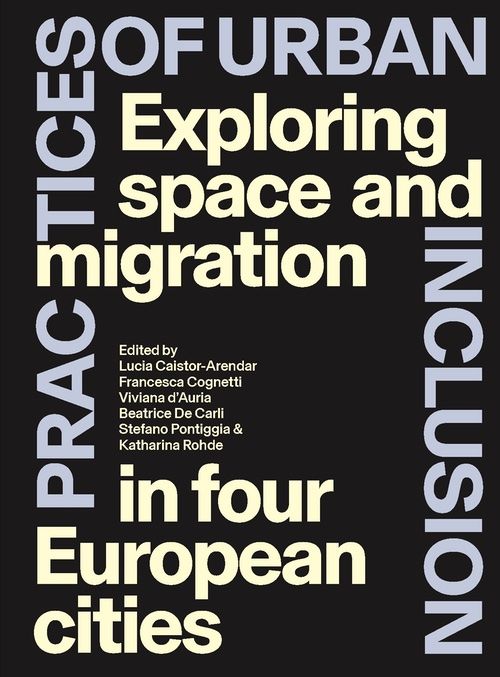




In recent years, migration policies have led to the erosion of fundamental rights for migrating persons in urban areas, with pathways to safe havens, both geographically and legally, gradually diminishing. This book explores the role of urban space and urban practice in creating conditions of exclusion and inclusion in European cities, especially in Berlin, Brussels, Milan and London.
Building on collaborative partnerships between civil society organisations and universities, it shares some of the lessons learned and concerns raised by an experimental learning programme situated at the intersection of architecture, urbanism and migration. The volume presents a collection of texts in multiple languages, interviews, visual essays and situated examples from citizen-led solidarity initiatives, pedagogical experiences and spatial practitioners. Taken together, this assemblage of materials seeks to revise urban practice and acknowledges the fundamental role of migration for critically understanding what cities are today and re-thinking what they could become in the future.
This book is the outcome of DESINC LIVE: Designing and Learning in the Context of Migration, a programme funded by Erasmus+ (Call 2019 Round 1 KA2 – Cooperation for Innovation and the Exchange of Good Practices; KA203 – Strategic Partnerships for Higher Education).