
Login / Înregistrare
ÎN GRABĂ? FOLOSEȘTE:

sau email

Utilizator nou

Ai pierdut parola?
Produse 
Produse 
  • 
      Login
      Librării
      Login
      Coșul tău
      Total RON Finalizare comandăComandă
      x
      
      Nu aveți produse în coș.
      Finalizare comandăComandă
      • carturesti.ro
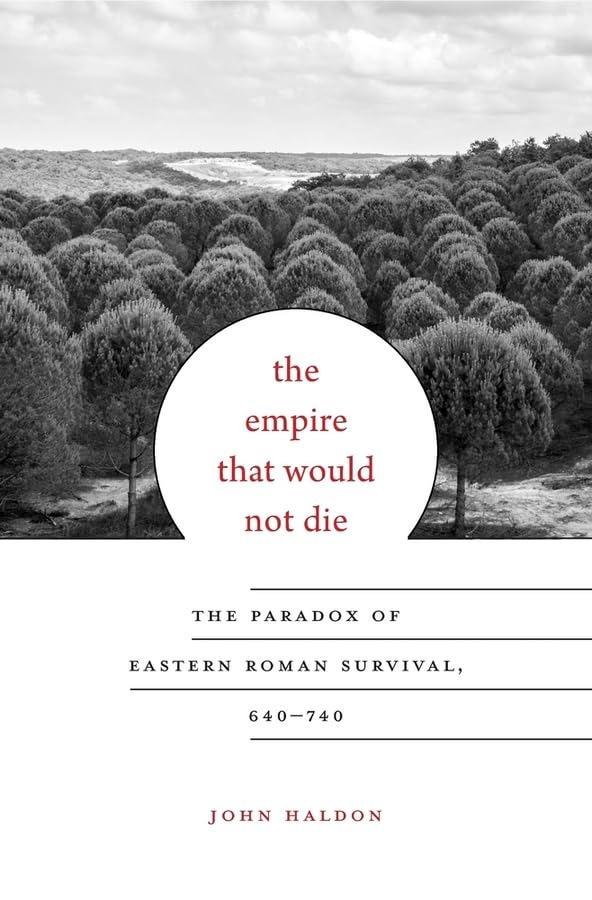
      • The Empire That Would Not Die
      „The Empire That Would Not Die”  în librăriile Cărturești
      Indisponibil în .
      Puțintică răbdare...
      Unde ne găsești
      The Empire That Would Not Die

      The Empire That Would Not Die

      The Paradox of Eastern Roman Survival, 640-740
      John Haldon
      0.0 / 10 ( 0 voturi)

      Categorii:
      Arheologie
      Limba:
      Engleza
      Data publicării:
      2016
      Editura:
      Harvard University Press
      Tip copertă:
      Hardcover
      Nr Pag:
      432
      Colectie:
      Carl Newell Jackson Lectures
      ISBN:
      9780674088771
      Dimensiuni: l: 15.5cm | H: 23.5cm | 3.5cm | 780g
      Adaugă în coș
      Adaugă în wishlist

      S-ar putea să-ți placă și:
      How to Fit All of Ancient Greece in an Elevator
      Theodoros Papakostas
      login
      Maps, Annotated
      login
      Sparta
      Andrew Bayliss
      login
      The Secret World of Denisovans
      Silvana Condemi, Francois Savatier, Francois Savatier, Francois Savatier, Francois Savatier, Francois Savatier, Francois Savatier
      login
      Descriere

      The eastern Roman Empire was the largest state in western Eurasia in the sixth century. Only a century later, it was a fraction of its former size. Surrounded by enemies, ravaged by warfare and disease, the empire seemed destined to collapse. Yet it did not die. In this holistic analysis, John Haldon elucidates the factors that allowed the eastern Roman Empire to survive against all odds into the eighth century.

      By 700 CE the empire had lost three-quarters of its territory to the Islamic caliphate. But the rugged geography of its remaining territories in Anatolia and the Aegean was strategically advantageous, preventing enemies from permanently occupying imperial towns and cities while leaving them vulnerable to Roman counterattacks. The more the empire shrank, the more it became centered around the capital of Constantinople, whose ability to withstand siege after siege proved decisive. Changes in climate also played a role, permitting shifts in agricultural production that benefitted the imperial economy.

      At the same time, the crisis confronting the empire forced the imperial court, the provincial ruling classes, and the church closer together. State and church together embodied a sacralized empire that held the emperor, not the patriarch, as Christendom's symbolic head. Despite its territorial losses, the empire suffered no serious political rupture. What remained became the heartland of a medieval Christian Roman state, with a powerful political theology that predicted the emperor would eventually prevail against God's enemies and establish Orthodox Christianity's world dominion.

      Recenzii și comentarii

      Nota

      de |

      Nu există recenzii pentru acest produs.
      • Termeni & condiții
      • Politică Cookie-uri
      • ANPC
      © Carturesti 2026 | ® Conținut cu drepturi protejate
      Personalizează