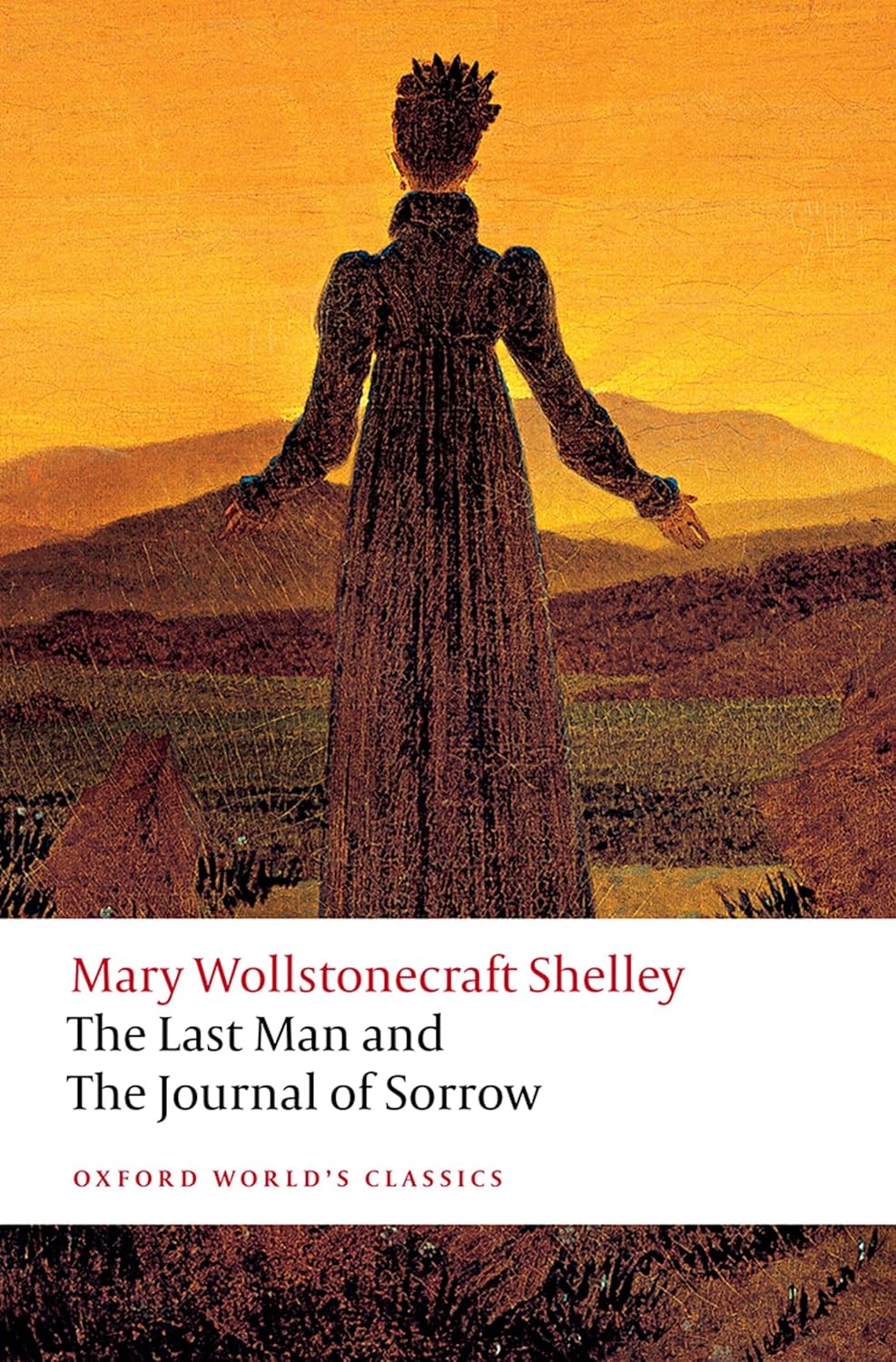

Mary Wollstonecraft Shelley began writing her 'Journal of Sorrow' (c.1822―6) three months after the devastating loss of her husband the poet Percy Bysshe Shelley to drowning. In the privacy of the diary's pages, she grapples with her overwhelming grief over the tragic losses of her young husband, three of their children, and their friend the poet Lord Byron. Shelley ultimately resisted a suicidal depression by throwing herself into writing the allegorical plague novel and roman-à-clef, The Last Man (1826). Rooted in her own experiences of plagues both real and metaphorical, Shelley set The Last Man in the aftermath of a pestilential, centuries-long war between Greece and Turkey in the late twenty-first century. The novel is an existential and political thought experiment which provokes the mortal reader to contemplate the meaning of life and death in the face of the human-made disasters of war, epidemic, and species extinction. Through the ever-hopeful voice of the narrator Lionel Verney, the eponymous last man, Shelley leads readers to consider: what shouldÂbe done after a massive global disaster?
This edition presents these two masterpieces together, with a new editorial introduction and notes for both texts, giving readers profound insight into Shelley's enduring relevance for existential philosophy, life writing, post-apocalyptic literature, and political thought.