

The Brandenburg Concertos are a collection of six instrumental works presented by Bach to Christian Ludwig, Margrave of Brandenburg-Schwedt. They are widely regarded as some of the best orchestral compositions of the Baroque era. The word grosso simply means “large,” for there are more soloists than was customary at the time, and the music tends to be more expansive. In the case of the Brandenburg Concerto No. 1, the soloists are so numerous that the work is virtually symphonic. At various points in the composition, Bach crafted solo roles for one violin, three oboes, one bassoon, and two horns—nearly as many musicians as might constitute a small orchestra. The second concerto of the set has a perilously high trumpet solo as well as solos for recorder (or flute), oboe, and violin. Brandenburg Concerto No. 3 features three each of violins, violas, and cellos. Soloists in the fourth concerto include two flutes and a violin and in the fifth a flute, a violin, and a harpsichord. Brandenburg Concerto No. 6, the only piece in the collection to include no violins whatsoever, spotlights the lower strings, supplemented, as always, by the harpsichord.
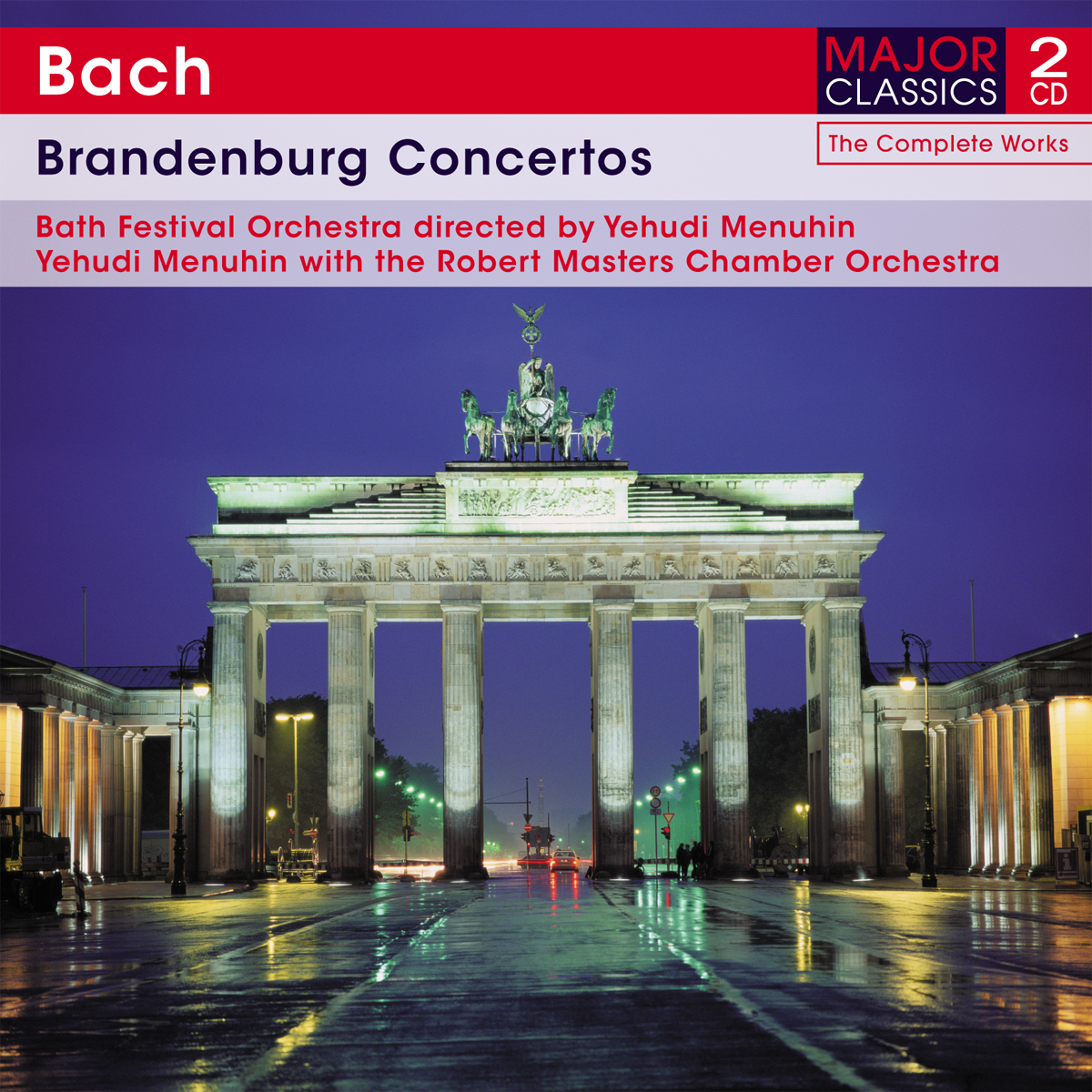
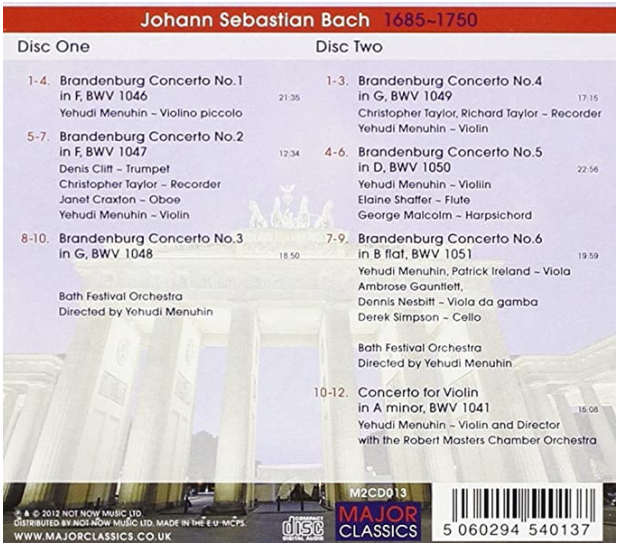
Bach: Brandenburg Concertos Nos. 1-6
Categorii:
Casa de discuri:
Data publicării:
2012
Număr discuri:
1
Suport:
CD
Format audio:
Stereo
Cod de bare:
5060294540137